
Leading Through Change: What We Took Away from the WICT Leadership Conference 2026
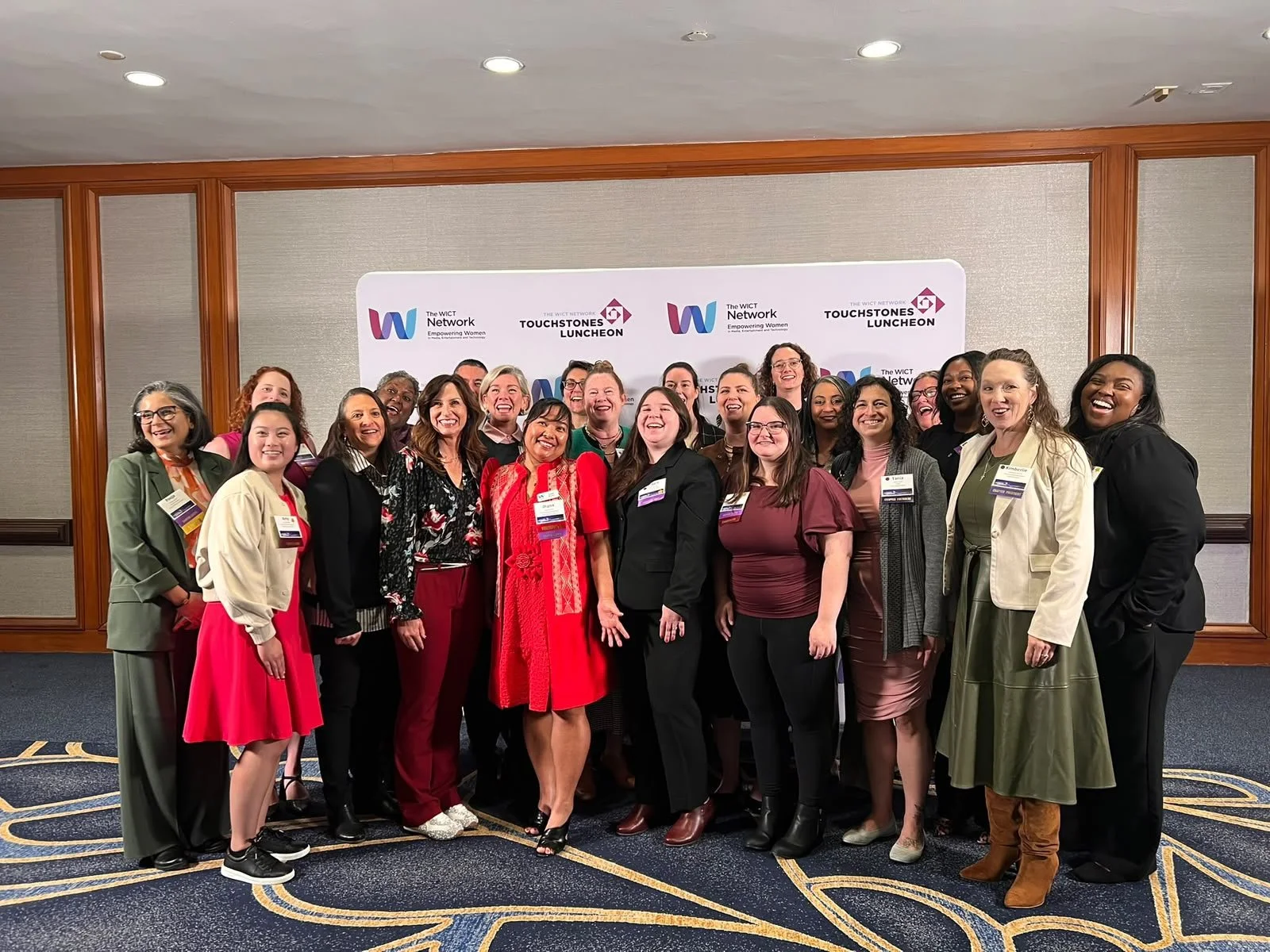
If there was one topic that surfaced in almost every conversation we had in New York this year, it was change.
Whether people were discussing AI, organisational transformation, evolving business models or the future of leadership itself, there was a shared recognition that our industries are being reshaped at an extraordinary pace. Across media, telecoms and technology, change is no longer something organisations prepare for occasionally. It has become a permanent feature of the landscape.
That made this year's WICT Leadership Conference theme, "Future Ready: Learn. Lead. Grow.", feel particularly relevant. Over two days, leaders from across media, entertainment, sports, gaming, technology and telecoms came together to share experiences, challenge assumptions and explore how we lead through uncertainty.
Representing WICT UK & Ireland were Aline Deglas and Eve Ronson, with Eve attending as part of a WICT Fellowship.
What surprised us wasn't how much people talked about change.
It was how often the conversation came back to people.
Starting with community
Before the main conference even began, we joined chapter leaders from across the WICT network for a series of roundtable discussions.
These sessions are always one of the highlights of the conference because they offer something that's difficult to replicate elsewhere: the chance to speak openly with people facing similar challenges, but in different markets and organisations.
The conversations ranged from membership growth and event programming to volunteer engagement and sponsorship. Yet despite the different contexts, many of the questions were remarkably similar.
How do we create meaningful value for members? How do we reach people who may not already have strong professional networks? How do we stay relevant when both careers and industries are changing so quickly?
There was something reassuring in discovering that many chapters are grappling with the same challenges. We came away with practical ideas, new connections and, perhaps most importantly, a renewed appreciation for the collective knowledge that exists across the wider WICT community.
Leadership in the messy middle
One session that stayed with us long after the conference ended was Leading Through the Messy Middle: Trust, Talent and Transformation.
Featuring leaders from NBCUniversal, Disney, Netflix and Comcast, the discussion focused on what leadership looks like when organisations are navigating significant change. It was honest, practical and refreshingly free from easy answers.
A theme emerged almost immediately: people don't expect leaders to have perfect certainty.
What they do expect is clarity, honesty and trust.
Several panellists spoke about the tension leaders face today. They're expected to make decisions in environments that are often evolving faster than the information available to them. In that context, leadership becomes less about presenting a flawless plan and more about helping people move forward despite uncertainty.
It was a reminder that transformation is rarely neat. Strategies may be designed on slides and in boardrooms, but change is ultimately experienced by people. Building trust, communicating clearly and bringing others along on the journey remain some of the most important leadership skills we have.
The discussion also reinforced the importance of sponsorship and professional networks. As career paths become less linear and roles continue to evolve, the ability to learn from others and expand your perspective becomes increasingly valuable. It is also one of the reasons organisations like WICT continue to matter.
AI was everywhere. The conversations were more interesting than the technology.
It would be impossible to write about this year's conference without mentioning AI.
It surfaced in keynote sessions, panel discussions, networking conversations and more than a few coffee-break debates.
What surprised us wasn't that people were talking about AI. It was the nature of those discussions.
A year or two ago, many conversations centred on what AI could do. This year, the questions felt much more grounded.
How do you lead teams through this transition? How do you help people build confidence rather than fear? How do organisations develop new capabilities while bringing everyone along with them?
The technology itself was almost taken as a given. The focus had shifted towards people, culture and leadership.
There was broad agreement that AI will continue to reshape how work gets done. But there was also recognition that uniquely human qualities are becoming more important, not less. Curiosity. Adaptability. Judgement. Communication. Empathy.
One comment we heard repeatedly throughout the conference was that leaders don't need to have all the answers. In a world where technology is evolving so quickly, that's simply not realistic. What matters more is creating environments where people feel able to learn, experiment and adapt together.
The future may be increasingly powered by AI, but it will still be shaped by people.
The conversations between the sessions
Looking back, some of our most valuable moments didn't happen on stage.
They happened over breakfast. Between sessions. At networking events. During conversations that started with a simple introduction and somehow ended an hour later.
One of the joys of attending WICT events is being reminded how generous people can be with their experiences. Whether sharing lessons learned from a difficult leadership challenge, offering advice on a career transition or simply comparing notes on industry trends, people were remarkably open.
Those conversations reinforced something we've often seen through WICT. Professional development isn't just about formal learning opportunities. It's also about relationships.
The people who challenge your thinking.
The people who share what they've learned.
The people who help you see a problem from a different perspective.
The people who make you feel a little less alone when you're navigating change yourself.
In an increasingly digital world, that human connection remains incredibly powerful.
Leaving New York
When we left New York, we brought home pages of notes, new ideas and a long list of people we'd like to stay connected with.
But the strongest takeaway wasn't a framework, a trend prediction or even an AI insight.
It was the reminder that while our industry continues to evolve, the things that help people navigate change remain remarkably consistent: a willingness to keep learning, a network you can lean on, and a community that helps you see new possibilities.
That message surfaced throughout the conference, from the chapter roundtables to the keynote sessions and the conversations in between. The organisations, challenges and perspectives were different, but the underlying theme was surprisingly similar: none of us has all the answers, and we don't need to navigate the future alone.
In many ways, that's the value of WICT.
It creates opportunities for people to learn from one another, build meaningful connections and grow their careers alongside a community that understands both the challenges and opportunities facing our industry.
The future will undoubtedly look different from today. But after two days in New York, we're more convinced than ever that the women and allies building that future are one of the industry's greatest strengths.
Aline Deglas & Eve Ronson
WICT UK & Ireland