
WICT Next Generation Leader Spotlight – Blog Three - Capgemini
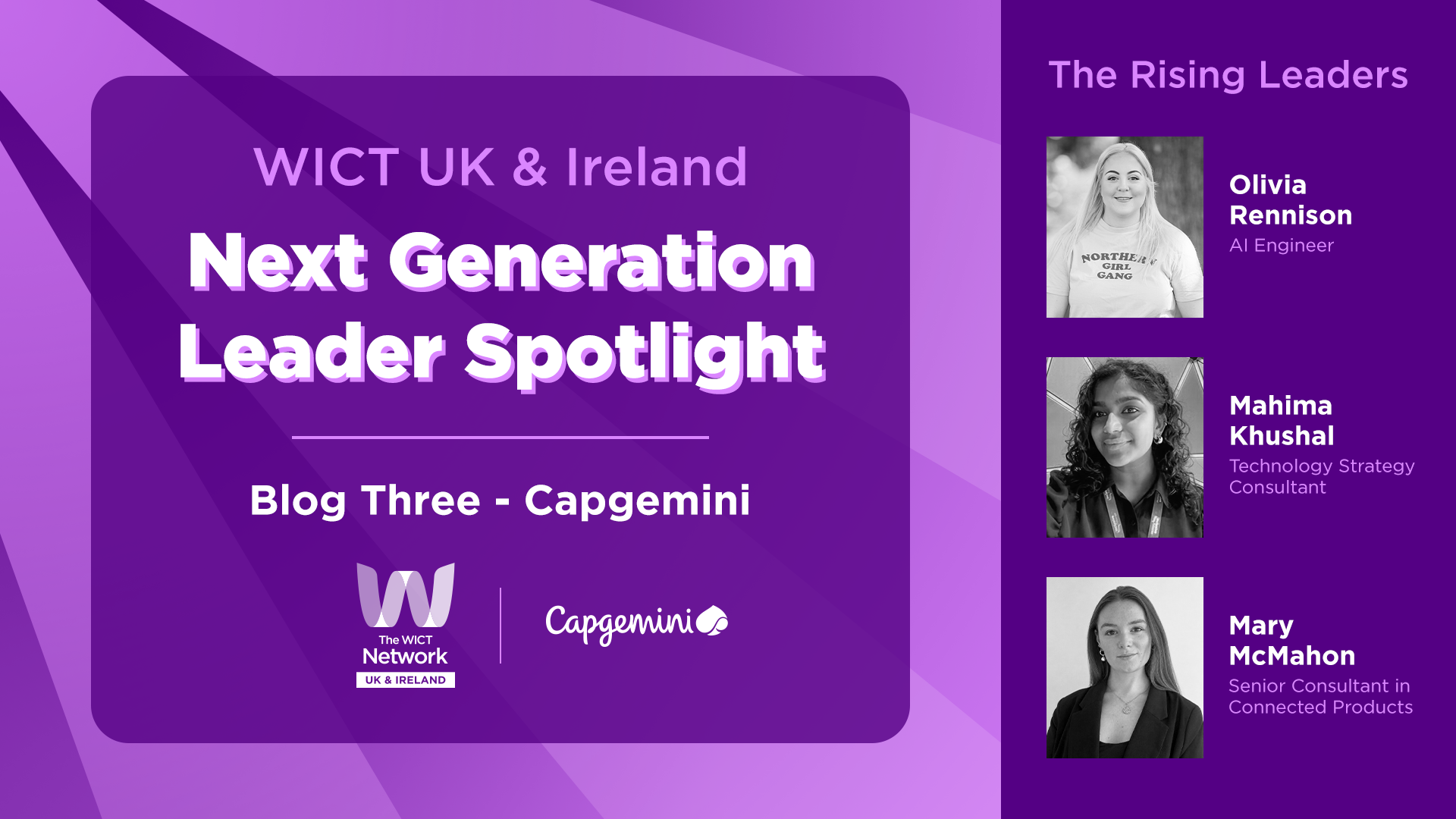
There is no single route into technology anymore.
Some careers begin in industry, others in consulting, and many move between the two. Whether working directly within telecoms and technology businesses or helping clients solve complex challenges as consultants, success is increasingly defined by curiosity, adaptability and a willingness to embrace new opportunities and experiences along the way.
The WICT UK & Ireland Next Generation Leader Spotlight exists to champion this shift, recognising women who are already shaping the future of telecoms and technology and redefining what leadership looks like for the next generation.
This edition features rising leaders from Capgemini. Their paths through AI engineering, technology strategy, cyber security and connected products demonstrate the breadth of opportunities available in technology. Several have successfully transitioned from in-house industry roles into consulting, bringing a unique perspective that combines hands-on operational experience with strategic problem-solving and transformation expertise.
The Rising Leaders
Olivia Rennison - Olivia is an AI Engineer at Capgemini, delivering AI solutions for clients and actively championing women in tech. Alongside her client work, she has taught SQL through Code First Girls, leads Capgemini's Bold Hub community, and regularly speaks on topics ranging from AI adoption to personal development.
Mahima Khushal - Mahima is a Technology Strategy Consultant at Capgemini, helping organisations shape technology strategies and turn them into practical outcomes. Prior to joining Capgemini, Mahima completed Vodafone's Cyber Security Graduate Scheme, gaining experience across cyber security and technology strategy.
Mary McMahon - Mary is a Senior Consultant in Connected Products and Services at Capgemini Invent. After starting her career on Virgin Media O2's Graduate Scheme, she moved into strategy and product roles at Liberty Global, working on AI-driven and converged propositions across Europe. She recently joined Capgemini Invent and is focused on innovation and the future of connected technologies.
In Conversation
While their careers have taken different paths, several common themes emerged: curiosity, ownership, authenticity and a willingness to step outside their comfort zones. We asked Olivia, Mahima and Mary about the experiences that shaped their careers, the leaders who inspire them and what leadership means to them today.
What early experience or turning point has most accelerated your growth so far?
Olivia: I started my graduate scheme believing that if you worked hard enough, the right people would notice and the rest would follow. Two years in, I realised that's not how careers work. Covid gave me the space to reflect and invest in my own development, and since then I've made a conscious effort to ask for opportunities rather than waiting for them. I live by a 'fail fast, fail forward' mindset. I'd rather make mistakes and keep moving than stay comfortable and stand still.
Mahima: Offboarding from my graduate scheme into the Technology Strategy team at Vodafone was the biggest turning point for me. It has pushed me out of my comfort zone, into a space where I had to take real ownership quickly. The team was small, but the scope was broad, so I got exposure to everything from shaping the strategy to detailed research. It was uncomfortable at first, but that's where I grew the most.
Mary: I’m a very curious person, and regularly played the ‘grad card’ putting time in with people if I thought they were up to something interesting. I may have rolled off the grad scheme a while ago, but my habit of asking questions certainly hasn’t, and the result is an excellent network. Curiosity is a trait I value in myself, and has led to all kinds of opportunities: from training invites, to job offers, to new friends. I wouldn’t be where I am if I hadn’t had the courage to ask questions, and if people hadn’t shown me the kindness of answering them.
Who inspires you and how have they shaped your ambitions?
Mary: Anne Boleyn. I think she’s undervalued as a protofeminist icon and strategic mind. Her rise from ‘not high-ranking enough to marry an earl’ to becoming Queen of England demonstrates strategic brilliance, and the exercise of intellectual and political influence in a society that largely denied women such opportunities. To me, it means no door is ever really closed when you have brains, spirit, and ambition. Unless you’re accused of witchcraft!
Olivia: I'm inspired by strong female leaders who combine confidence, authenticity and empathy. Within WICT, Sarah Golley has shown me the power of being direct, influential and warm at the same time, while at Capgemini, leaders such as Jo Peplow, Sue Kirby and Claire Williams demonstrate that you can build credibility, be assertive and remain true to yourself. They've reinforced my belief that great leadership isn't about fitting a mold, it's about leading authentically and helping others believe they can do the same.
Mahima: I've been fortunate to work with strong leaders throughout my career who have shaped how I think about leadership. During my time at Vodafone, I was particularly inspired by a leader whose clarity, direction and ability to create space for others to take ownership left a lasting impression. More recently at Capgemini, I've seen the impact of leaders who combine deep expertise, particularly in digital strategy, with a genuinely empowering approach to people. That balance of knowing your craft while helping others grow is the kind of leader I aspire to be.
How do you approach leadership at this stage of your career — and what will define the next generation of leaders?
Mahima: At this stage, I see leadership as less about authority and more about how you show up by being proactive, taking ownership and building strong relationships. The best people I have worked with have been those who are not only strong in their own area, but also intentional about connecting with and enabling others. I think the next generation of leaders will be defined by that balance.
Mary: For me, great leadership is built on trust and empathy. Trust comes from being consistent, credible and delivering on your commitments, while empathy is about understanding the impact your decisions have on customers, colleagues and stakeholders. I believe the next generation of leaders will be defined less by hierarchy and more by their ability to build trust, support people through change and create environments where others feel valued, accountable and empowered to succeed.
Olivia: The biggest shift for me was realising that there is no one-size-fits-all approach to leadership. Different people need different things, and great leaders adapt their style accordingly. For me, leadership is built on empathy, assertiveness and authenticity, understanding others' perspectives, communicating clearly, and being confident enough to lead as yourself. I believe the next generation of leaders will be defined by adaptability, self-awareness and the confidence to embrace their own leadership style.
What connects these rising leaders is not their job titles or career journeys, but how they approach growth and leadership. Each has embraced opportunities outside their comfort zone, taken ownership early and built careers through curiosity, learning and strong relationships.
As technology continues to evolve, so too will leadership. The next generation will be defined not by hierarchy, but by adaptability, trust, empathy and the confidence to create opportunities for others while remaining true to themselves.
Georgia & Eve – WICT UK & Ireland Next Generation Co – Chairs